
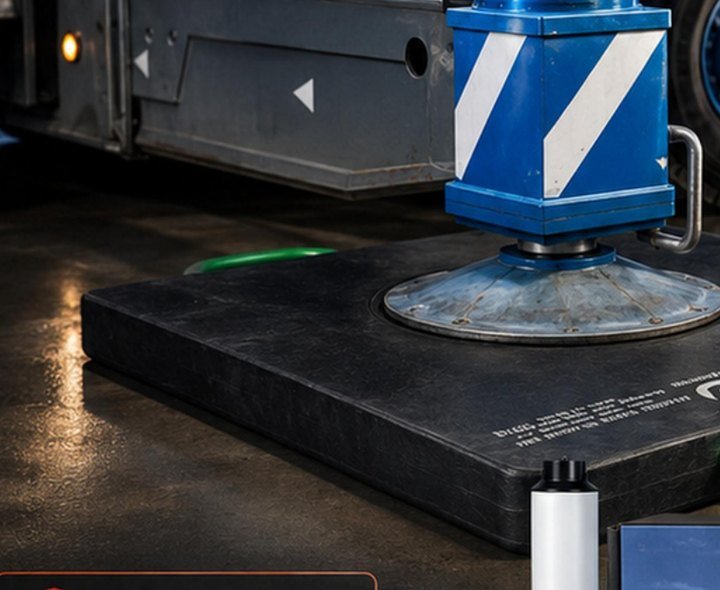
Outrigger pads spread the enormous weight of a crane over a larger area so the ground can safely carry it. Choosing the wrong size is one of the most common causes of crane instability on site — so it pays to get it right.
1. Know your ground bearing pressure
Every lift starts with two numbers: the load each outrigger puts on the ground, and the bearing capacity of the ground underneath it. If the pressure from the outrigger is higher than what the ground can take, the pad will sink — and the crane can tip.
2. Match the pad area to the load
The larger the pad, the more the load is spread and the lower the pressure. As a simple rule:
- Firm, compacted ground needs a smaller pad.
- Soft, sandy or freshly filled ground needs a much larger pad.
- When in doubt, go one size up — a bigger pad is always safer.
3. Choose the right material
Modern fiber and composite pads are light, strong and easy for one person to carry and position. They resist water, oil and impact, and they will not rot or splinter like timber mats.
4. Inspect before every lift
Check pads for deep cracks, delamination or warping before each job. A damaged pad cannot spread load evenly.
Not sure which size you need? Send us your crane model and outrigger load and our team will recommend the correct certified pad.